
 By admin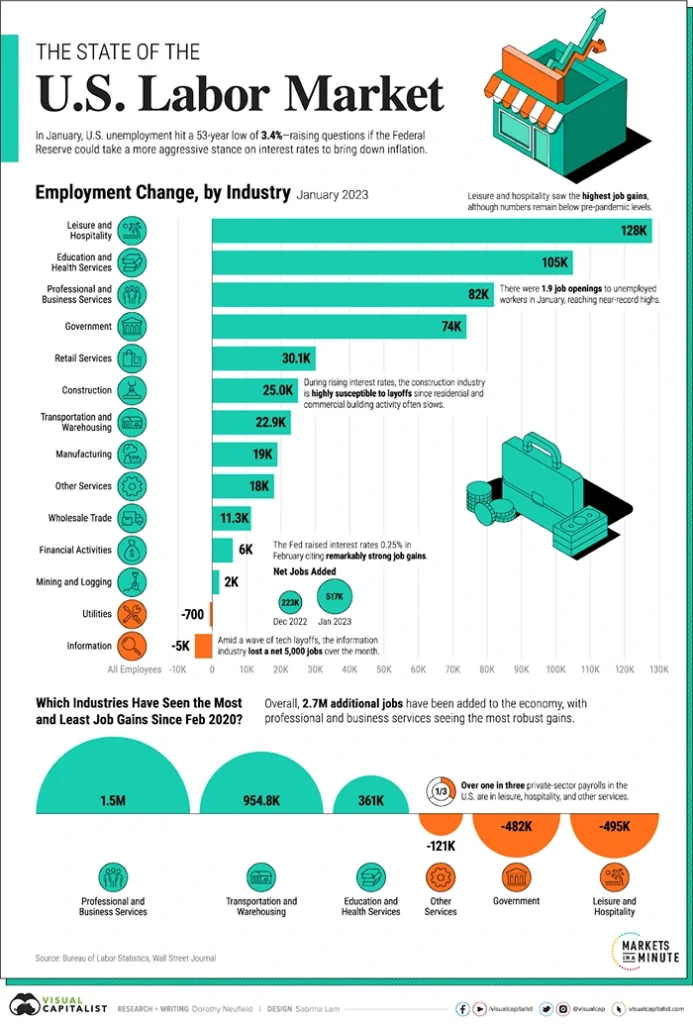
USA Job Market: Boom or Bust?
Introduction
The US job market – it’s a topic that’s constantly in the headlines, sparking debates at dinner tables and dominating water cooler conversations. One minute, we’re hearing about record-low unemployment; the next, we’re bracing for potential recession winds. Is it a story of unbridled growth, a temporary bubble about to burst, or something far more complex? Let’s dive in and unpack the current state of affairs, exploring both the short-term sizzle and the long-term simmer of the American job landscape.
The Short-Term Buzz: A Mixed Bag of Nuts
On the surface, things look pretty rosy. Unemployment rates hover near historic lows, with some sectors practically begging for qualified candidates. The hospitality industry, rebounding from pandemic shutdowns, is actively seeking workers, often sweetening the deal with increased wages and benefits. The tech sector, despite recent layoffs, remains a powerhouse of innovation, creating new roles in fields like artificial intelligence and cybersecurity. Healthcare, driven by an aging population, is a perennial source of job growth, from nurses and therapists to medical technicians and administrative staff.
But scratch beneath the surface, and the picture becomes less uniform. Inflation, though cooling, continues to squeeze household budgets, making job security and wage growth critical concerns. The fear of a recession, fueled by rising interest rates and global economic uncertainty, lingers in the background. Some industries, like manufacturing, face challenges from automation and global competition, leading to job displacement and the need for workforce retraining.
The Long-Term Loom: Shifting Sands and Evolving Skills
Looking beyond the immediate fluctuations, several long-term trends are reshaping the American job market.
- The Rise of Automation: Artificial intelligence and robotics are increasingly automating routine tasks across various industries, from manufacturing and logistics to customer service and data entry. While this may eliminate certain jobs, it also creates new opportunities for those who can manage, maintain, and develop these technologies.
- The Skills Gap: A growing mismatch exists between the skills employers need and the skills job seekers possess. This skills gap is particularly acute in fields like technology, healthcare, and advanced manufacturing, where demand for specialized knowledge far outstrips supply.
- The Gig Economy: The rise of freelance work, contract positions, and platform-based jobs is transforming the traditional employer-employee relationship. While the gig economy offers flexibility and autonomy, it also raises concerns about job security, benefits, and worker protections.
- The Silver Tsunami: The aging of the Baby Boomer generation is leading to a mass exodus from the workforce, creating opportunities for younger workers but also posing challenges for industries that rely on experienced employees.
- Remote Work Revolution: The pandemic accelerated the adoption of remote work, and while the dust settles, it’s clear that hybrid models and geographically dispersed teams are here to stay. This shift has implications for everything from office space to talent acquisition strategies.
Navigating the Uncertainties: Practical Solutions for a Brighter Future
So, what can individuals and businesses do to navigate these turbulent waters and ensure a brighter future for the American job market?
- Embrace Lifelong Learning: In a rapidly changing world, continuous learning is no longer a luxury but a necessity. Invest in your own skills and knowledge by taking online courses, attending workshops, earning certifications, or pursuing advanced degrees. Focus on developing skills that are in high demand, such as data analysis, coding, project management, and communication. Platforms like Coursera, Udemy, and LinkedIn Learning offer a vast array of courses to upskill or reskill.
- Example: A former retail worker takes an online course in digital marketing and transitions to a new career as a social media manager.
- Develop “Soft Skills”: While technical skills are important, don’t overlook the importance of soft skills like critical thinking, problem-solving, communication, and teamwork. These skills are essential for adapting to new roles, collaborating with others, and leading teams.
- Network Strategically: Building a strong professional network is crucial for finding job opportunities, gaining insights into industry trends, and advancing your career. Attend industry events, join professional organizations, connect with people on LinkedIn, and reach out to mentors and advisors.
- Explore Alternative Career Paths: Don’t be afraid to explore alternative career paths, such as freelancing, entrepreneurship, or starting your own business. The gig economy offers a wide range of opportunities for those who are willing to take risks and be self-directed.
- Invest in Education and Training: Businesses need to invest in training and development programs to upskill their existing workforce and attract new talent. This can include apprenticeships, on-the-job training, tuition reimbursement, and leadership development programs.
- Case Study: A manufacturing company partners with a local community college to create a customized training program for its employees, equipping them with the skills they need to operate advanced machinery.
- Foster a Culture of Innovation: Businesses should create a culture that encourages innovation, experimentation, and continuous improvement. This can involve empowering employees to share ideas, providing them with the resources they need to experiment, and rewarding them for taking risks.
- Embrace Diversity and Inclusion: A diverse and inclusive workforce is more innovative, creative, and resilient. Businesses should actively recruit and retain employees from diverse backgrounds, and they should create a workplace where everyone feels valued and respected.
- Partner with Educational Institutions: Businesses should partner with colleges, universities, and vocational schools to develop programs that meet their specific needs. This can involve offering internships, sponsoring research projects, and providing guest lectures.
Alternative Approaches to Consider
- Focus on Specific Industries: Instead of trying to be everything to everyone, focus your efforts on industries that are experiencing strong growth, such as renewable energy, biotechnology, and cybersecurity.
- Target Specific Demographics: Tailor your recruitment and training programs to meet the needs of specific demographics, such as veterans, people with disabilities, or those re-entering the workforce.
- Leverage Technology: Use technology to streamline your hiring process, automate routine tasks, and improve communication with employees.
- Offer Flexible Work Arrangements: Offer flexible work arrangements, such as remote work, flextime, and job sharing, to attract and retain top talent.
Conclusion: An Optimistic Outlook with a Call to Action
The American job market is undoubtedly facing challenges, but it also presents tremendous opportunities. By embracing lifelong learning, developing essential skills, and adapting to the changing landscape, individuals can navigate the uncertainties and build successful careers. Businesses that invest in their workforce, foster a culture of innovation, and embrace diversity and inclusion will be best positioned to thrive in the years to come.
The future of the American job market is not predetermined. It is being shaped by the choices we make today. Let’s choose to invest in our future, embrace innovation, and create a more inclusive and prosperous economy for all. The time to act is now. Don’t just sit back and watch; take control of your career path and shape the future you want. Explore new skills, network with industry professionals, and be proactive in seeking out opportunities. The boom or bust narrative is less about fate and more about preparation, adaptation, and relentless pursuit of growth. Let’s build a future where the American job market is not just surviving but thriving.